Structural Drying & Dehumidification in Brockton, MA
After the water is out, the drying team dries your home to a verified dry standard with air movers, LGR dehumidifiers, and daily moisture readings, with local crews across every Brockton neighborhood.
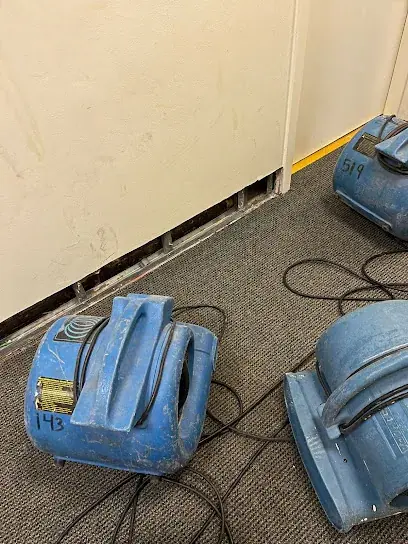
Extraction gets the water you can see. Structural drying gets the water you cannot, the moisture that soaked into framing, subfloor, wall cavities, and the cores of a block foundation. This is the part of a water loss that decides whether your home comes back sound or quietly grows mold and warps behind the drywall. The drying team dries Brockton homes to a measured, verified standard using calibrated air movers, LGR dehumidifiers, and daily moisture readings, so the structure is genuinely dry, not just dry to the touch.
How structural drying actually works
Drying a building is a controlled process, not a couple of fans left in a room. It balances four things.
- Moisture mapping, using meters and thermal imaging to find the true edge of the wet area so nothing damp is left inside a wall.
- Air movers, placed to sweep moisture off wet surfaces and into the air where it can be removed.
- LGR dehumidifiers, low grain refrigerant units that pull that airborne moisture out and keep the space dry enough to keep evaporation going.
- Daily readings, because the plan is adjusted as materials give up their water, and the equipment stays until the numbers hit the target.
Water is out but the structure is still wet? That is the moment that matters most. Call and a local crew gets moving across Brockton to set drying equipment before mold sets in.
Call (508) 444-8517Why the right dry-out matters in Brockton homes
More than eight in ten Brockton homes were built before 1980, and close to nine in ten have a basement, which means a lot of old framing, plaster, and finished lower levels that hold water and are slow to give it back. Damp New England weather and humid summers work against natural drying, so a basement or wall that seems to air out on its own often stays wet deep inside for weeks. That hidden moisture is exactly what feeds mold and rot. The crew sizes the equipment to the space and the materials, monitors it daily, and dries the framing and cavities rather than sealing a damp wall back up. Once the water is extracted by the water extraction and removal crew, and any basement flooding cleanup is done, structural drying is what carries the job to a real finish. For general guidance on drying out after water damage, the CDC page on floods and standing water is a solid reference.
Dry to the touch is not dry
A surface can feel dry while the framing behind it still reads high on a moisture meter. Pulling the equipment too early is the most common reason a repaired room grows mold months later, so a real dry-out ends when the readings say dry, not when the floor looks fine.
Documentation, insurance, and drying to a standard
Drying to a verified standard is not only about your home, it is what protects your claim. Adjusters want to see that the structure reached a defined dry target before it was closed up, and the drying team records exactly that, with dated moisture logs, equipment counts, and photos across every day the equipment ran. That documentation supports the claim and shows the work was done right. Coverage depends on your policy, so it is worth checking with your own insurer. When the water traces back to a plumbing failure, the drying pairs with the burst pipe cleanup so the wall is verified dry before it is rebuilt. For broader flood recovery guidance, the EPA keeps a useful page on flooding.
Serving Brockton and the South Shore
Coverage runs across the city and the surrounding South Shore towns, day or night.
The Brockton water damage line covers the whole city and the South Shore, day or night, with rapid local response from a restoration team that answers around the clock.
Coverage reaches Campello, Montello, the West Side, Brookville, Holbrook, Avon, Abington, Whitman, Stoughton, the Bridgewaters, and every Brockton neighborhood.
See every neighborhood and ZIP covered ›Common questions, answered
What is structural drying and why do I need it?
It is the controlled drying of the building itself, the framing, subfloor, and wall cavities, after the standing water is removed. Extraction gets visible water, but gallons stay soaked into materials. Without a proper dry-out that hidden moisture grows mold and warps the structure within days.
Can I just use fans to dry it out myself?
Fans move air but do not remove moisture from the space, so in a damp basement they often just spread it around. A real dry-out balances air movers with LGR dehumidifiers that actually pull the water out, sized to the space, with daily readings to confirm the materials are drying, not just the surface.
How long does structural drying take?
Most jobs run three to five days, but it depends on how wet the materials are, what they are made of, and the humidity. Older Brockton plaster and framing dry slower than modern drywall. The drying team measures daily and keeps the equipment running until the readings hit the target, rather than guessing by a fixed number of days.
How do you know when it is actually dry?
The drying team takes moisture readings on the wet materials and compares them to a dry reference in an unaffected part of the home. When the affected framing and subfloor reach that verified dry standard, the structure is dry and the equipment comes out. The numbers decide, not how it feels to the touch.
Does insurance cover structural drying?
Usually, when it is part of a covered water loss. Drying to a verified standard is a normal, expected part of the repair, and the daily moisture logs and equipment records support the claim. Coverage depends on your policy, so it is worth checking with your own insurer.
How fast can you start drying my Brockton home?
Brockton water damage pros answer 24/7 and reach the whole city fast. The sooner the equipment is running after the water is out, the less chance moisture has to soak deeper and start mold in your framing and walls.
Will the equipment be loud or in the way?
Air movers and dehumidifiers do run continuously and make steady noise while they work, which is a few days in most cases. The crew places them to dry the space effectively while keeping the home as usable as possible, and removes them as soon as the readings confirm it is dry.
How much does structural drying cost?
It depends on how much of the home is wet, the materials involved, and how many days of equipment it takes to hit the dry standard. When it is part of a covered loss, most homeowners pay only their deductible. The equipment and readings are documented for your claim.
Brockton's water damage crew is standing by
Water sitting means damage growing. Call Holbrook Waterproofing and the response team gets moving, 24/7.
(508) 444-8517Tap to call, a person answers 24/7